
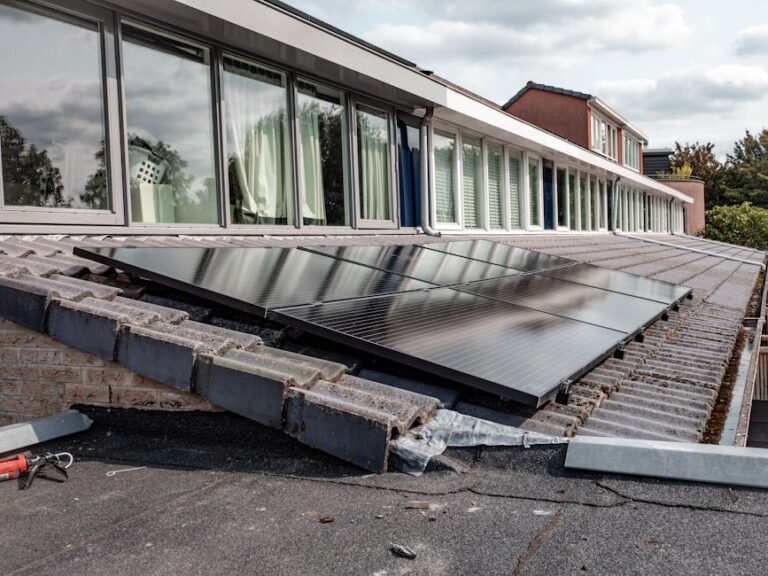

The average American home can save over $1,500 a year by switching to solar. But choosing the right panels is the key to maximizing those savings. With dozens of models on the market, finding the best solar panels for home use 2026 requires comparing efficiency, durability, and price. The top residential solar panels 2026 range from 21.4% to 22.8% efficiency and cost between $0.50 and $0.90 per watt. Our analysis covers both budget-friendly Canadian Solar HiKu7 panels and premium SunPower M Series, so you can match the technology to your roof and budget.
Why Choosing the Best Solar Panels for Home Use 2026 Matters
Solar technology improves every year. In 2026, panels reach efficiency levels above 23 percent, meaning they convert more sunlight into electricity than ever before. Buying the best rooftop solar systems now locks in decades of lower utility bills. Efficient home solar panels also increase property value and reduce reliance on the grid. The right panels can cut your electricity costs by 70 percent or more, depending on your location and system size. High efficiency solar panels 2026 models last 25 to 30 years with minimal degradation. Investing in quality means less hassle and greater savings over the long run.
Many homeowners skip the research and end up with mediocre panels that underperform. Reading solar panel reviews 2026 from trusted sources helps you avoid that mistake. You need to match the panel type to your roof size, climate, and budget. For instance, monocrystalline panels dominate the high-efficiency segment, while polycrystalline panels remain a budget-friendly choice. The best solar brands 2026 offer strong warranties, solid customer support, and proven field performance. A good panel is the foundation of your entire home solar energy solutions system.
Top Residential Solar Panels 2026: Our Picks
After analyzing specifications, warranty terms, and real-world reviews, we selected the best panels for different needs. The table below compares these key metrics across five leading models.
| Brand Model | Efficiency | Power Output (W) | Warranty | Price Range |
|---|---|---|---|---|
| SunPower M Series 440 | 22.8% | 440W | 25 years (95% power retention) | $$$ |
| Qcells Q.TRON BLK M-G2+ | 22.0% | 400W | 25 years (92% power retention) | $$ |
| Canadian Solar HiKu7 550 | 21.4% | 550W | 25 years (84.8% power retention) | $ |
| REC Alpha Pure-R 420 | 22.0% | 420W | 25 years (92% power retention) | $$$ |
| Panasonic EverVolt 410 | 22.2% | 410W | 25 years (92% power retention) | $$ |
Premium Option: SunPower M Series
SunPower remains one of the best solar brands 2026 for homeowners who want maximum efficiency. Its M Series panels achieve 22.8 percent efficiency and come with a 25-year warranty that guarantees 95 percent power output. These panels perform well in low-light and high-heat conditions. They are ideal if you have limited roof space and want the highest possible energy production.
Best Value: Qcells Q.TRON
Qcells balances price and performance. With 22 percent efficiency and a solid warranty, these panels deliver reliable output. They use N-type cells that degrade slower than older P-type designs. The Q.TRON series is widely available and works well with most inverters. This is a top pick for homeowners seeking affordable solar panels for homes without sacrificing quality.
Budget-Friendly: Canadian Solar HiKu7
Canadian Solar’s HiKu7 series offers 550W peak power, the highest wattage in its class. Efficiency sits at 21.4 percent, which is respectable for a budget-friendly option. The larger panel size means fewer panels overall, saving on racking and labor costs. This is a strong choice if you have ample roof space and want to maximize energy production per dollar.
What to Look For in Efficient Home Solar Panels
Not all efficient home solar panels perform the same. Four key factors determine real-world output: efficiency, temperature coefficient, degradation rate, and warranty. Efficiency tells you how much sunlight becomes electricity. Today, 20 to 22 percent is standard, but premium models reach 23 percent. Temperature coefficient matters in hot climates. A lower coefficient means better performance on summer afternoons. Degradation rate shows how much power the panel loses each year. Top panels degrade at 0.25 percent annually, so they still produce over 90 percent of their original output after 25 years.
Warranty coverage protects your investment. Look for a 25-year product warranty and a power output guarantee. Some manufacturers offer 30-year warranties. Reading solar panel reviews 2026 helps you spot which brands honor their warranties and which do not. Also consider the panel’s fire rating, wind and snow load, and compatibility with best rooftop solar systems. You want panels that can survive extreme weather without cracking or blistering.
Another factor is the panel’s temperature coefficient. A coefficient of -0.30%/°C means the panel loses 0.3 percent of output for every degree Celsius above 25°C. A lower coefficient is better. In a hot region, an efficient panel can outperform a less efficient one simply because it handles heat better. Home solar energy solutions like these require careful component matching. Pair high-efficiency panels with a quality inverter and racking system for the best results. For example, a SunPower panel with a -0.29%/°C coefficient in Phoenix could generate 3 percent more annual energy than a panel with a -0.40%/°C coefficient.
Solar Panel Installation Guide 2026: Steps to Get Started
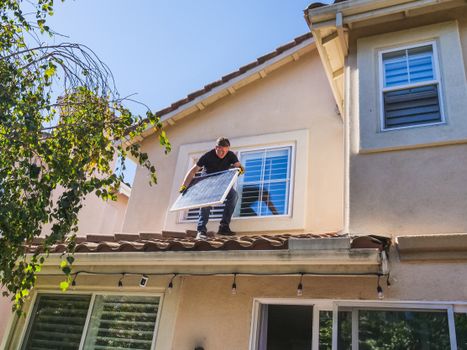
Installing solar panels involves more than just mounting them on the roof. A proper solar panel installation guide 2026 covers site assessment, permit, equipment selection, and professional installation. Start by evaluating your roof’s condition, orientation, shading, and structural strength. South-facing roofs with a 15 to 40 degree tilt capture the most sunlight. Shading from trees or chimneys can cut output dramatically, so trim branches or consider microinverters to minimize losses.
Next, choose your equipment. Decide between monocrystalline or polycrystalline panels, string inverters or microinverters, and whether you want battery storage. Solar Incentives & ROI (2026 Edition) shows how federal tax credits and state rebates reduce upfront costs. You can download a Solar Buyer’s Checklist to track every step. Hire a licensed installer with experience in best rooftop solar systems. They will handle permits, utility interconnection, and final inspection.
After installation, monitor your system’s performance. Most modern inverters include an app that shows real-time production. Check it monthly to catch issues early. What Happens After You Install Solar explains maintenance routines, like cleaning panels once or twice a year. With proper care, your panels will generate clean power for decades.
Solar Panel Cost and Savings 2026: What Homeowners Pay
The cost of solar panels has dropped steadily. In 2026, the average gross price for a 10 kW system is between $18,000 and $25,000 before incentives. After the 30 percent federal tax credit, that net price falls to $12,600 to $17,500. State and local incentives can reduce it further. Solar panel cost and savings 2026 depend heavily on your location and energy usage. Most homeowners see a payback period of 7 to 10 years, then free electricity for the remainder of the panel’s life. For example, a California household with a 10 kW system and net metering could break even in just six years.
Affordable solar panels for homes now cost under $0.50 per watt, but high-efficiency models run $0.70 to $0.90 per watt. The extra upfront spend often pays for itself through higher output, especially on smaller roofs. Use online calculators to estimate your specific savings. Factor in net metering policies, which credit you for excess energy sent to the grid. Without net metering, you may need a Solar + Battery Storage solution to maximize your investment. Battery storage costs have also fallen, making home solar energy solutions more complete than ever.
Frequently Asked Questions
What are the most efficient solar panels for home use in 2026?
The most efficient residential panels in 2026 are monocrystalline models like SunPower M Series (22.8%) and Panasonic EverVolt (22.2%). These high efficiency solar panels 2026 perform well in limited roof space and produce more power per square foot.
How much do solar panels cost for a typical home in 2026?
A typical 10 kW system ranges from $18,000 to $25,000 before tax credits. After the 30% federal incentive, homeowners pay $12,600 to $17,500. Solar panel cost and savings 2026 vary by region, but most systems pay for themselves within 10 years.
Do I need a battery with my solar system?
Battery storage is optional but beneficial if you want backup power or time-of-use rate savings. It is also useful where net metering is limited. A solar + battery setup increases energy independence and can reduce grid reliance further.
How do I choose a reliable solar installer?
Look for licensed, insured installers with good reviews, NABCEP certification, and at least five years of experience. Read solar panel reviews 2026 and ask for references. Check your state’s contractor board for complaints. Solar Installer Recommendation offers guidance on vetting professionals.