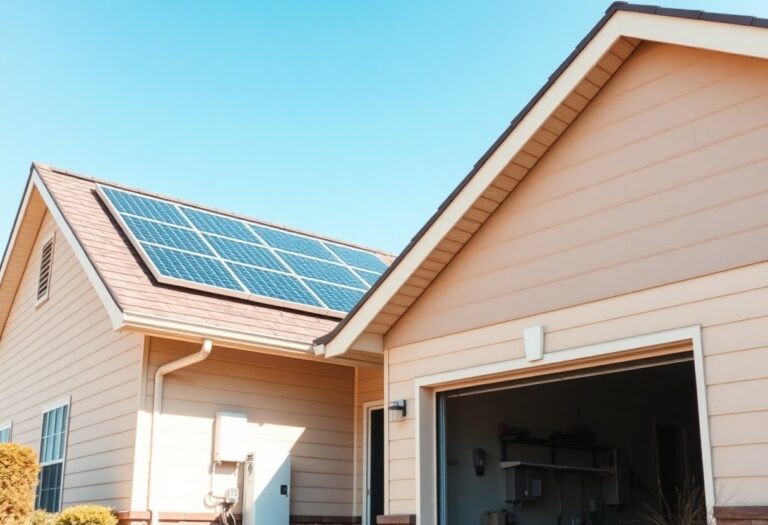

Energy from the sun powers solar systems that convert sunlight into electricity using panels and inverters, and you can install them on your roof to lower your bills and increase self-reliance. You should know that poor installation or damaged equipment can create electrical and fire hazards, so use qualified installers and proper maintenance. Solar also offers clean, long-term savings and can reduce grid dependence while increasing your home’s value, making it a practical option if you want predictable energy costs and environmental benefits.
Key Takeaways:
- Solar panels convert sunlight into electricity (photovoltaic) or heat water (solar thermal), enabling on-site energy generation that reduces reliance on the grid.
- Home solar can lower energy bills, cut greenhouse gas emissions, and often increase property value; federal/state incentives and net metering can improve financial returns.
- Assess upfront costs, roof orientation/condition, local rules, and warranty/financing options-maintenance is generally low but planning ensures the best long-term outcome.
What Is Solar Energy?
At its core, solar energy captures sunlight to produce heat or electricity directly at your property. Photovoltaic panels turn photons into DC electricity and solar thermal systems heat fluid for domestic use; a typical 6 kW residential PV array can generate roughly 7,000-9,000 kWh/year depending on site. You can offset most of your consumption with proper sizing, and policies like a federal 30% tax credit significantly reduce upfront cost.
Definition
Solar energy is the conversion of sunlight into usable power or heat using engineered systems you install on your roof or property. PV modules-usually silicon-based-convert light into electricity with modern panels averaging 15-22% efficiency, while solar thermal collectors can convert about 50-70% of incident sunlight into hot water. You size systems in kilowatts (kW) and track production in kilowatt-hours (kWh) to match your usage.
How Solar Energy Works
Sunlight excites electrons in PV cells, producing DC current that flows through wiring and into an inverter which converts it to AC for your breaker panel and appliances. Systems often operate at 200-600V DC on the roof, creating a real shock hazard during installation or maintenance, and they can either export surplus to the grid or charge batteries for backup.
Digging deeper, inverter choices matter: string inverters are cost-effective, while microinverters or power optimizers boost output on shaded or complex roofs. Production varies by location-a 1 kW array may yield ~1,800-2,200 kWh/year in very sunny regions versus ~1,100-1,300 kWh/year in cloudier climates-and panels typically degrade about 0.5%/yr with common 25-year warranties, which shapes long-term payback.
Benefits of Solar Energy
Beyond cutting your utility costs, solar increases resilience during outages and often raises property value. You reduce reliance on the grid and lower or even eliminate your electric bill; many systems qualify for net metering so excess energy earns credits. In sun-heavy states, a typical 6 kW array can supply about 60-90% of a household’s electricity, locking in energy costs for 25+ years. However, improper installation can create electrical and fire risks, so you should use qualified installers.
Environmental Benefits
By installing panels you directly cut greenhouse gases and local air pollution. A 6 kW rooftop system producing roughly 7,000-9,000 kWh/year typically offsets about 3-6 metric tons of CO2 annually (varies by grid mix), while also reducing SO2/NOx emissions and water use tied to fossil generation. Several cities with high rooftop adoption report measurable improvements in urban air quality and public-health outcomes.
Economic Advantages
Financially, solar gives you predictable savings, tax incentives, and resilience against rising rates. The federal Investment Tax Credit of 30% lowers upfront cost, net metering can credit exported energy, and systems generally need little maintenance. Many homeowners see a simple payback around 6-10 years depending on local electricity prices and incentives, after which on-site power effectively becomes very low-cost for a 25-30 year system life.
For example, if a 6 kW system costs $18,000 before incentives, the 30% tax credit reduces your net to $12,600; with annual electric savings of $1,500 your simple payback is 8.4 years. Over a 25-year span you could net $20,000-$40,000 in lifetime savings, and studies from LBNL show solar-equipped homes frequently sell at a premium, helping you recover much of the installed cost.
Types of Solar Energy Systems
You’ll typically see systems that either generate electricity or harvest heat: Photovoltaic (PV), Solar thermal, PV‑T hybrids, Concentrated PV/CSP, and Off‑grid battery setups. Each has different performance, cost, and maintenance profiles – PV panels run at roughly 15-22% efficiency, thermal collectors deliver water at 40-90°C, and hybrids try to capture both. Assume that you’ll evaluate roof area, shading, and local solar irradiance when choosing.
| Photovoltaic (PV) | Electricity from semiconductor cells; typical residential sizes 3-10 kW, ~4 kWh/kW/day in sunny locales. |
| Solar thermal | Hot water/heating with flat‑plate or evacuated tubes; can supply 50-80% of hot water in summer. |
| PV‑T hybrid | Combined electricity + heat from one panel; boosts overall energy capture but adds complexity and cost. |
| Concentrated PV/CSP | Mirrors/lenses concentrate sunlight for high temps or high‑efficiency cells; rare for typical homes. |
| Off‑grid / battery | PV plus battery storage for independence; battery capacity typically sized in kWh to meet nightly loads. |
- Photovoltaic
- Solar thermal
- PV‑T
- Concentrated
- Off‑grid
Photovoltaic Systems
You install modules, an inverter, and wiring to turn sunlight into usable AC for your home; a typical roof‑mounted system is 3-10 kW and a well‑placed 6 kW array can produce ~20-30 kWh/day depending on location. You should plan for inverter replacement around 10-15 years and expect module degradation ~0.5-1%/year. Pay attention to shading and DC cable routing because DC voltages raise fire and shock risks.
Solar Thermal Systems
Flat‑plate collectors and evacuated tubes heat a transfer fluid that feeds a storage tank to supply domestic hot water or space heating; typical residential systems use 2-4 m² of collector area and can cover 50-80% of summer hot water demand. You’ll need antifreeze loops in freeze‑prone areas and a controller to prevent overheating and stagnation.
Collectors, pumps, a dedicated tank, and controls are the core components; evacuated tubes often outperform flat plates in winter and can give ~10-20% higher winter output, while sizing guidelines suggest about 1-2 m² per household member. You should expect routine checks every 3-5 years, glycol replacement roughly every 5-10 years, and strict attention to pressure relief and mixing valves because scalding and overpressure are real safety concerns.
How to Install Solar Panels
Installation typically covers site survey, permits and inspections, racking, panel mounting, inverter and meter hookup, then final commissioning. You’ll usually see a 5-7 kW system using 12-18 panels; crews often complete roof work in 1-3 days while permits and interconnection take 1-4 weeks. Because roof work can be hazardous, hire a licensed installer, confirm local inspections, and factor in the 30% federal tax credit to lower upfront cost.
Assessing Your Home’s Suitability
Start by checking roof orientation and shading: a south‑facing roof with a 20-40° tilt performs best in the northern hemisphere, while even small tree shade can reduce output by 20-40%. You should verify roof age-if it’s over 10 years or due for replacement within five years, replace it first. Also estimate usable area: a typical 6 kW system requires about 300-400 sq ft (roughly 12-18 standard panels).
Choosing a Solar Provider
Prioritize certifications and warranties: seek installers with NABCEP or state licensure, a 25‑year panel performance warranty and a minimum 10‑year workmanship guarantee. Compare ownership options (purchase, loan, PPA/lease), confirm the company handles permits and interconnection, and insist on site‑specific production estimates in kWh rather than generic claims.
Ask for at least three written bids and compare price per watt (typical installed range $2-$4/watt) plus projected annual kWh from PVWatts or PVsyst models. Verify insurance, local references, and that the installer will pull permits and handle utility paperwork; avoid high‑pressure sales and verbal‑only guarantees. Factor in the 30% federal tax credit when calculating net cost and request a year‑by‑year savings breakdown.
Common Myths About Solar Energy
Many homeowners assume solar is only for the wealthy or the sunniest states, but falling equipment costs and stronger incentives mean you can often achieve payback under 10 years while boosting outage resilience. You should factor in the 30% federal tax credit plus state rebates and net metering; financing and leases change cash flow, and beware aggressive or misleading sales tactics that promise unrealistic returns.
Cost Myths
You may think solar always costs a fortune, yet typical U.S. residential installs now average about $2.50-$3.50 per watt, so a 6 kW system often runs $15,000-$21,000 before incentives. Applying the 30% federal tax credit and local rebates can cut that significantly, producing many homeowners’ break-even in 6-10 years; compare lifetime savings, not just upfront price, and watch for high-pressure or scam offers.
Efficiency Myths
You might believe panels only work on bright cloudless days, but modern modules typically convert roughly 18-23% of sunlight to electricity and still generate useful power in diffuse light; countries with less sun, like Germany, still produce substantial solar output. Also note panels have a temperature coefficient (~-0.3% to -0.5% per °C), so extreme heat lowers peak output.
For a practical example, a 6 kW system receiving about 4.5 peak sun hours/day will produce roughly ~9,800 kWh/year, which can cover most household consumption; panels typically degrade around 0.4-0.8% per year, and manufacturers usually guarantee about 80-92% output at 25 years, so long-term energy yields remain strong even as efficiency slowly declines.
Future of Solar Energy
Expect rapid growth in rooftops and community arrays as costs keep falling – module prices have dropped by over 80% since 2010 – and storage scales. Analysts see accelerating deployment of distributed and utility projects; in many markets, solar-plus-storage undercuts new gas-fired generation. You should plan for more local power options, smarter grids, and shorter payback periods on new installations.
Technological Advancements
Panel efficiency and system design are improving quickly: typical residential modules now run about 20-22% efficiency, while perovskite-silicon tandem cells aim above 30% in labs. Bifacial panels and single-axis trackers can boost yield by 5-15% depending on site. You’ll also see DC-coupled solar-plus-storage, smart inverters providing frequency support, and early vehicle-to-grid pilots that let your EV act as a backup battery.
Policy and Market Trends
In policy, incentives and interconnection rules shape adoption: the U.S. federal Investment Tax Credit currently offers a 30% residential credit through 2032, while many states are revising net metering, altering paybacks. Municipal programs, community solar, and corporate PPAs keep prices competitive. If you follow policy shifts-especially interconnection queue reforms-you can time installations to maximize incentives and avoid slow permitting that erodes savings.
State and national moves matter: California’s requirement for solar on most new homes since 2020 added tens of thousands of rooftop systems, and feed-in tariffs historically drove Germany’s adoption. At the same time, interconnection backlogs in some U.S. regions can delay projects for months to years, eroding expected savings. The Inflation Reduction Act’s domestic-content and wage provisions give bonuses that benefit U.S. manufacturing but can raise short-term costs for some installations; you should weigh incentive timing against local queue delays when planning your system.
To wrap up
Now you understand that solar energy harnesses sunlight via panels to produce electricity for your home, lowering your energy bills and dependence on the grid while adding long-term value; for a practical explanation of system components and installation, see How Does Solar Power Work on a House?.
FAQ
Q: What is solar energy and how does it power a typical home?
A: Solar energy is the electricity generated when sunlight is converted into electrical current, typically by photovoltaic (PV) panels made of semiconductor cells. When photons from sunlight hit the PV cells they free electrons, producing direct current (DC). An inverter converts that DC into alternating current (AC) used by home appliances. In a grid-tied system excess daytime production can flow back to the utility (often earning credits), while at night the home draws power from the grid or from batteries if the system includes storage.
Q: What components are included in a standard residential solar system?
A: Core components are solar panels, an inverter (string, microinverters, or power optimizers), mounting/racking to secure panels to the roof or ground, and electrical wiring and safety disconnects. Optional but common parts include a battery for backup or time-shifting, a monitoring system to track production and usage, and a meter for net metering. Installation also involves site assessment, roof mounts or ground frames, and often a generation permit and interconnection agreement with the utility.
Q: What should a homeowner know about costs, savings, and upkeep?
A: Upfront costs vary with system size, equipment quality, and local labor rates; federal, state, and local incentives can substantially lower net cost. Savings come from reduced utility bills, potential net metering credits, and long-term protection against rising electricity rates. Typical payback periods range from 5-15 years depending on local electricity prices and incentives. Maintenance is low: occasional panel cleaning, trimming nearby trees to avoid shade, monitoring system performance, and replacing inverters or batteries after roughly 10-15 years for some components. Most panels carry 25+ year production warranties, but verify warranty details and factor expected degradation into long-term estimates.