Summary
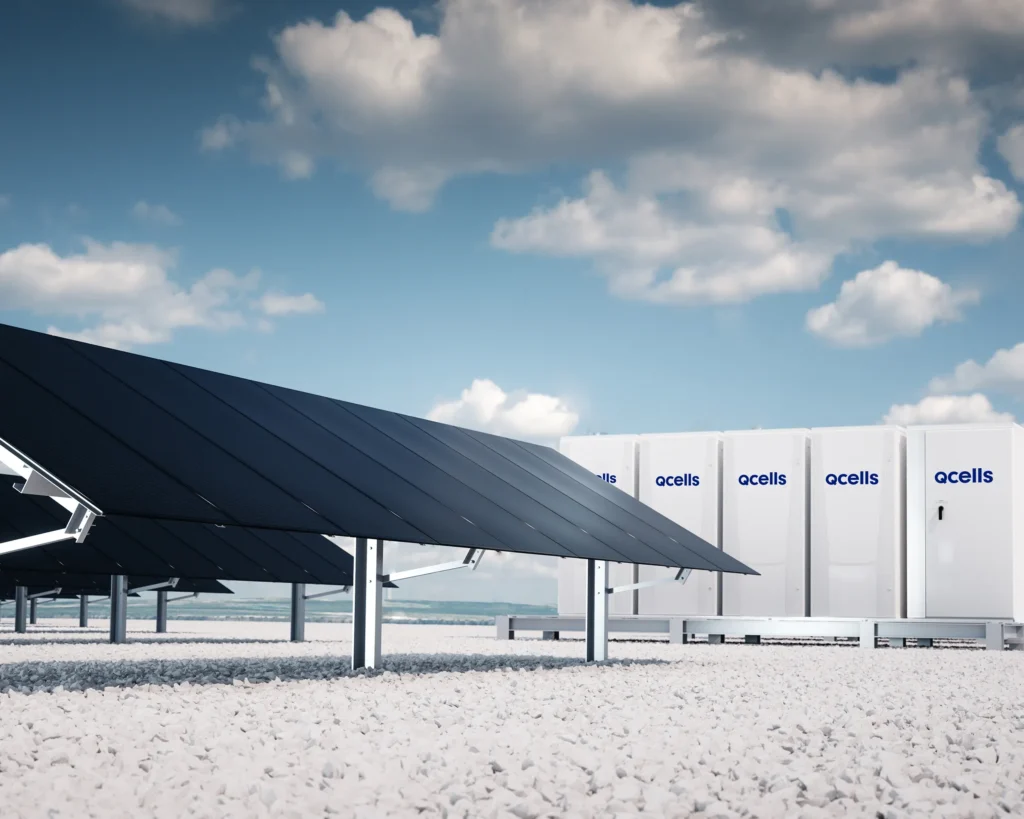
Qcells has become the default recommendation for American homeowners who want strong efficiency and serious mechanical durability without paying top-tier prices — backed by one of the largest solar manufacturing footprints in the Western Hemisphere. Its Q.TRON line sits just below the absolute efficiency leaders, but leads the pack on snow and wind load durability, U.S.-based manufacturing, and supply chain reliability.
Quick Picks
| Best for | Cold climates, heavy snow load, “Buy American” buyers |
| Efficiency | ~22.0–22.5% |
| Warranty | 25 years product & performance |
| Price per watt (panel only) | ~$0.70–$1.00 |
| Temperature coefficient | ~-0.30% to -0.34%/°C |
| Degradation guarantee (yr 25) | ~86% |
| Overall rating | 4.4 / 5 — Best mid-tier value with strong mechanical durability |
Quick Navigation
- Efficiency and Power Output
- Temperature Performance
- Degradation and Long-Term Output
- Warranty Coverage
- Price
- Decision Box: Who Should Buy Qcells
- Buying Guide Tips
- Installation Costs
- Tax Credits
- FAQ
- Final Recommendation
How We Reviewed This Panel
We evaluated Qcells against the same five criteria used across this entire guide: rated efficiency, temperature coefficient, guaranteed degradation over 25 years, warranty terms (including labor coverage), and price per watt relative to comparable premium and mid-tier panels. We also weighted manufacturing footprint and field-reported mechanical durability, since those factors disproportionately affect long-term reliability and parts availability for U.S. homeowners.
Comparison Table: Qcells vs. the Competition
| Panel | Efficiency | Temp Coefficient | Warranty | Price/Watt |
|---|---|---|---|---|
| Qcells Q.TRON | 22.0–22.5% | -0.30 to -0.34%/°C | 25 yrs | $0.70–$1.00 |
| Maxeon 7 | 24.1% | -0.27 to -0.29%/°C | 40 yrs | $0.90–$1.50 |
| Aiko Neostar/Comet | 23.6–25.0% | -0.24 to -0.26%/°C | 25–30 yrs | $0.90–$1.50 |
| REC Alpha Pure-R/RX | 22.0–22.6% | -0.24%/°C | 25 yrs (+ProTrust labor) | $0.90–$1.50 |
| Canadian Solar HiKu7 | 21.4–22.5% | ~-0.34%/°C | 25 yrs | $0.55–$0.75 |
Efficiency and Power Output
Qcells’ flagship residential line, the Q.TRON, is rated between 22.0% and 22.5% efficiency, built on TOPCon (tunnel oxide passivated contact) cell technology. That places it solidly above the 21–21.5% industry average for mainstream panels, though behind the back-contact leaders — Maxeon (24.1%) and Aiko (up to 25.0%) — and roughly on par with REC.
Panel wattages typically range from 400W to 435W in standard residential formats, which is competitive for a TOPCon panel and gives Qcells a strong power-to-price ratio compared to premium back-contact options.
Temperature Performance
This is one area where Qcells trails the premium leaders. Its temperature coefficient sits around -0.30% to -0.34% per °C, meaningfully behind REC and Aiko’s -0.24 to -0.26%/°C and Maxeon’s -0.27 to -0.29%/°C. In hot climates like the Southwest or Deep South, this means Qcells panels will lose somewhat more output on peak summer days than the top HJT and back-contact alternatives. It’s not a dealbreaker, but homeowners in consistently hot regions may get better lifetime output from REC or Aiko despite the higher upfront price.
Degradation and Long-Term Output
Qcells guarantees roughly 86% output at year 25, in line with the mainstream TOPCon segment but behind the 90–95% guarantees offered by Maxeon, Aiko, and REC. Annual degradation typically runs in the 0.4–0.5% range. This is a reasonable, industry-standard guarantee rather than a standout one — it’s a spec where Qcells is competitive but not class-leading.
Warranty Coverage
Qcells offers a standard 25-year product and performance warranty, matching most of the industry outside of Maxeon’s unusual 40-year term. What sets Qcells apart isn’t the warranty length on paper — it’s the backing behind it. Qcells’ large-scale Dalton, Georgia manufacturing facility, one of the biggest solar plants in the Western Hemisphere, gives the company a stronger domestic parts and claims-servicing infrastructure than most competitors relying entirely on overseas manufacturing. For homeowners who worry about a manufacturer’s ability to actually honor a 25-year warranty, that domestic footprint is a meaningful reassurance.
Price
Qcells panels typically run $0.70–$1.00 per watt for the panel alone, positioning the brand squarely in the mid-tier — more expensive than budget options from Jinko or Trina ($0.55–$0.75/W), but noticeably cheaper than the premium back-contact and HJT tier occupied by Maxeon, Aiko, and REC ($0.90–$1.50/W). This is arguably Qcells’ strongest overall selling point: efficiency and mechanical durability that punch above the mid-tier price bracket.
Decision Box: Who Should Buy Qcells
✅ Best for:
- Homeowners in snow-heavy or cold-climate regions (Minnesota, Michigan, Colorado, the Northeast)
- Buyers who prioritize U.S.-based manufacturing and domestic supply chain reliability
- Anyone who wants strong mid-tier efficiency without paying premium back-contact/HJT pricing
- Installations where mechanical durability under load matters more than maximum efficiency
❌ Consider REC, Aiko, or Maxeon instead if:
- You’re in a hot climate and want the best possible temperature performance
- You want the highest efficiency available to maximize output on a small roof
- You want a degradation guarantee above the 90% mark at year 25
Buying Guide: What to Check Before You Buy Qcells
- Confirm the exact Q.TRON model. Qcells sells multiple Q.TRON variants with different wattage and efficiency specs — ask your installer for the specific datasheet, not just the brand name.
- Ask about snow load rating in Pa. If you’re in a heavy-snow region, request the panel’s certified snow load rating (Qcells panels have been field-reported holding up under loads exceeding 5,000 Pa) and confirm your racking system is rated to match.
- Check installer certification. Qcells has one of the largest installer networks in the U.S., so shop around — pricing on Qcells systems tends to vary more by installer margin than by panel availability.
- Compare against REC if you’re borderline on climate. If your home sees more hot months than cold ones, it’s worth pricing out REC or Aiko alongside Qcells before deciding, since temperature performance is Qcells’ one clear weak spot.
Installation Costs
A typical 8 kW residential system using Qcells Q.TRON panels runs close to the national average, roughly $20,000–$26,000 installed before incentives, or about $2.50–$3.25 per watt. Because Qcells sits in the mid-tier price bracket rather than the premium one, systems built around it tend to land toward the middle of the broader $2.50–$3.50/W national range rather than the top end.
Tax Credits
As with every panel in this guide, the 30% federal residential solar tax credit (Section 25D) expired on December 31, 2025 and is not available to homeowners purchasing systems outright in 2026. Qcells’ domestic manufacturing may still be relevant to certain state-level incentive programs or utility rebates that favor U.S.-made equipment — check your state’s current solar incentive list, since domestic-content provisions vary by program. Third-party owned lease/PPA systems may still indirectly reflect incentive value through the separate commercial clean energy credit (Section 48E), available through 2027.
FAQ
Is Qcells a good brand for solar panels? Yes. Qcells is one of the most widely installed panel brands in the U.S., backed by large-scale domestic manufacturing, strong mechanical durability, and competitive mid-tier pricing. It’s a particularly strong choice for cold-climate and snow-heavy installations.
Are Qcells panels made in the USA? Qcells manufactures a significant share of its residential panels at its Dalton, Georgia facility, one of the largest solar panel manufacturing plants in the Western Hemisphere, though some components and cell production may still involve international supply chains. Confirm the specific manufacturing origin of your exact model with your installer if domestic content matters for your incentive eligibility.
How does Qcells compare to Maxeon or REC? Qcells trails Maxeon, Aiko, and REC on efficiency and temperature coefficient, but costs meaningfully less per watt and offers stronger field-reported snow and mechanical durability. It’s the better choice for cold-climate, budget-conscious buyers; the premium brands are better for hot climates or space-constrained roofs.
What is Qcells’ warranty? Qcells offers a standard 25-year product and performance warranty, guaranteeing roughly 86% of rated output at year 25.
Final Recommendation
Qcells earns its reputation as the best mid-tier value pick in residential solar for 2026 — strong TOPCon efficiency, one of the most reassuring domestic manufacturing footprints in the industry, and field-proven durability in snow and cold climates, all at a price meaningfully below the premium back-contact and HJT tier. It’s not the panel to choose if you’re chasing maximum efficiency or the best possible heat performance, but for the majority of U.S. homeowners — particularly those in colder states — it offers one of the strongest efficiency-to-price ratios on the market.
To see how a budget-focused, high-wattage alternative compares, check out our full Canadian Solar review, where large-format panels and aggressive pricing make it one of the most popular picks for homeowners with ample roof space.
Panel specifications reflect manufacturer datasheets and third-party testing data as of 2026. Always confirm current specs and pricing with your installer before purchasing.