
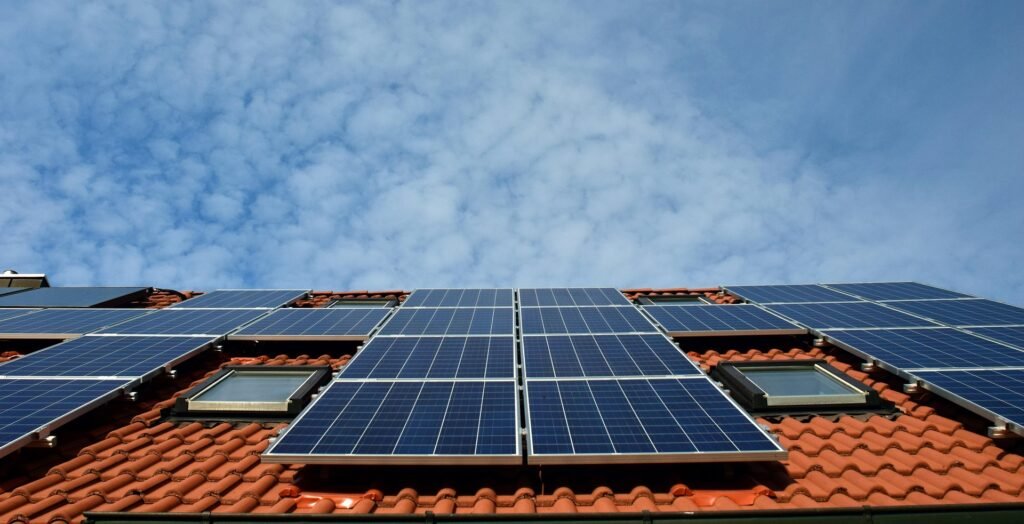
Aiko Solar has moved from a relatively unfamiliar name in the U.S. residential market to one of the most talked-about brands in solar in just a couple of years. The reason is simple: Aiko’s ABC (All Back Contact) cell technology is currently producing some of the highest efficiency ratings commercially available on residential rooftops, and in some configurations, it’s edging out even Maxeon for the top spot.
Efficiency and Power Output
Aiko’s flagship residential lines — marketed under names like the Neostar and Comet series — range from roughly 23.6% up to 25.0% efficiency depending on the exact model and cell format. The 25.0% figure, achieved by Aiko’s most advanced ABC modules, currently represents the highest efficiency of any commercially available residential solar panel, edging past Maxeon’s IBC-based Maxeon 7 (around 24.1%).
Like Maxeon’s back-contact design, Aiko’s ABC technology moves all electrical contacts to the rear of the cell, removing the front-side grid lines that block a portion of incoming sunlight on conventional panels. The practical benefit is the same: more usable power from the same physical panel size, which matters most for homeowners working with a smaller or partially shaded roof.
Temperature Performance
Aiko panels are frequently cited alongside REC as having some of the best temperature coefficients on the market, typically in the -0.24% to -0.26% per °C range. That puts Aiko ahead of Maxeon’s roughly -0.27% to -0.29%/°C and well ahead of mainstream TOPCon panels, which often sit at -0.30% to -0.35%/°C. For homeowners in hot climates, this is one of the more underrated advantages of choosing Aiko — the panel simply loses less output as roof temperatures climb through the afternoon, which compounds meaningfully over a full summer season.
Degradation Rate and Long-Term Output
Back-contact designs generally hold up well over time, and Aiko’s field data so far supports strong long-term performance, with degradation guarantees generally landing in the 90–92% output range at year 25 — comparable to REC and just slightly behind Maxeon’s top-end guarantee. Annual degradation is typically well under 0.4%, consistent with other premium back-contact and HJT panels.
Warranty Coverage
Aiko’s standard warranty runs 25 to 30 years, depending on the specific product line and region. That’s solidly in line with the premium end of the industry, though it doesn’t match Maxeon’s unusual 40-year term. Because Aiko is a comparatively newer entrant to the U.S. residential market, its long-term claims-servicing track record here is shorter than legacy brands like Panasonic or REC — worth a direct conversation with your installer about local parts availability and warranty support before committing.
Price
Aiko sits in the premium tier alongside REC and Maxeon, generally priced in a similar $0.90–$1.50 per watt range for the panel alone. Given that Aiko’s efficiency edges out Maxeon in some configurations, it can offer a slightly better efficiency-to-price ratio for buyers focused purely on maximizing output per dollar within the premium tier — though total installed pricing will depend heavily on local installer availability, since Aiko’s U.S. distribution network is still expanding compared to more established brands.
Who Should Buy Aiko Solar
Best for:
- Homeowners chasing the absolute highest efficiency currently available on the residential market
- Hot-climate installs, thanks to a class-leading temperature coefficient
- Small or tightly constrained roofs where every fraction of a percent in efficiency translates to real usable output
- Buyers comfortable working with a newer (but rapidly growing) brand in the U.S. market
Maybe skip it if:
- You want the longest possible warranty term — Maxeon’s 40-year coverage still leads the category
- Your local installer network has limited or no Aiko supply relationships
- You prioritize a long, well-established U.S. service history over cutting-edge efficiency specs
Bottom Line
Aiko Solar has quickly become the panel to watch in 2026, delivering the highest efficiency ratings currently available on the residential market alongside an excellent temperature coefficient that rivals REC. It’s an excellent choice for homeowners prioritizing maximum output per square foot, provided a qualified local installer can source and service the panels in your area. To see how a heterojunction alternative compares — particularly on temperature performance and warranty structure — check out our full REC Group review, where REC’s ProTrust labor warranty and industry-leading temperature coefficient make it one of the strongest all-around premium picks for 2026.
Panel specifications reflect manufacturer datasheets and third-party testing data as of 2026. Always confirm current specs and pricing with your installer before purchasing.

One thought on “Aiko Solar Review: The New Efficiency Leader in Residential Solar for 2026”