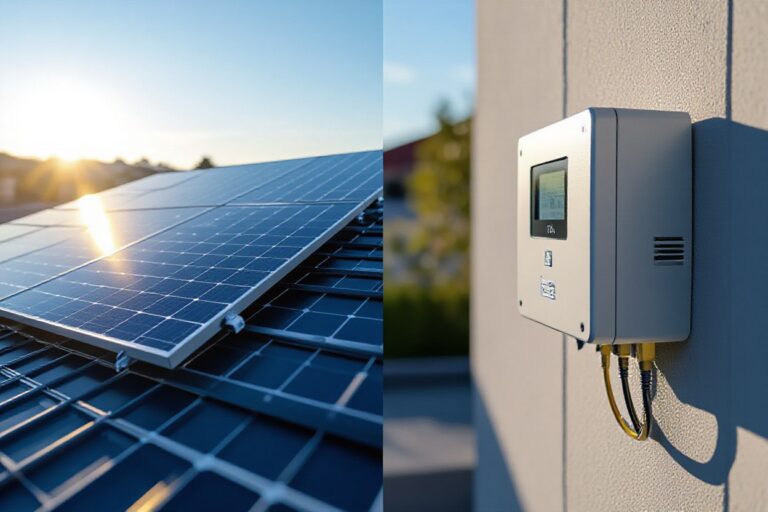

Over the years, I’ve noticed that most people think solar panels and inverters are basically the same thing… or worse, that they’re interchangeable terms for your rooftop solar system. But here’s what you need to know – they’re completely different components that work together. Solar panels capture sunlight and convert it into DC electricity, while inverters take that DC power and transform it into AC electricity that your home can actually use. Think of it this way: panels are the collectors, inverters are the translators. Without both working together, you can’t power your TV, fridge, or anything else in your house. And because your inverter handles all the electrical conversion, choosing the right one is just as important as selecting quality panels for your roof.
Key Takeaways:
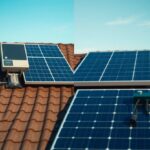
- Understanding the difference between solar panels and inverters can save you from some pretty confusing conversations with installers. Solar panels are the blue or black rectangles on your roof that actually capture sunlight and convert it into DC electricity… but here’s where it gets interesting. That DC power isn’t something your fridge or TV can use. You need an inverter (which some folks call a solar converter) to flip that DC electricity into AC power that runs your home. Think of it this way – panels are the collectors, inverters are the translators. Without both working together, you’ve just got expensive roof decorations that can’t actually power anything in your house.
- The type of inverter you choose matters way more than most people realize. String inverters are like having one brain controlling all your panels at once – they’re cheaper upfront but if one panel underperforms because of shade or dirt, it can drag down your whole system’s output. Microinverters work at the individual panel level, so each panel does its own thing independently. Yeah, they cost more initially, but if you’ve got trees nearby or a complicated roof layout with different angles, they can seriously boost your energy production over time. And when something goes wrong? String inverters are usually easier to access for repairs since they’re not stuck on your roof.
- If you’re adding batteries to your solar setup, you’re entering a whole new world of components. Batteries store energy as DC power, which means you need that inverter to convert it back to AC when you want to use it. But there’s another piece of equipment called a charge controller that regulates how power flows between your panels and batteries – it’s basically the traffic cop preventing your batteries from getting overcharged or damaged. Not every solar system needs a charge controller, only the ones with battery storage. So when you’re planning your system, think about whether you want backup power during outages… because that decision affects which equipment you’ll actually need.
What the Heck Are Solar Panels Anyway?
At their core, solar panels are photovoltaic (PV) modules that convert sunlight directly into DC electricity through the photovoltaic effect. Each panel contains dozens of silicon cells – typically 60 to 72 cells for residential systems – that generate around 300 to 400 watts of power under optimal conditions. When photons from sunlight hit these cells, they knock electrons loose, creating an electrical current that flows in one direction… which is why your panels produce DC power, not the AC electricity your home actually needs. And here’s something most people don’t realize – solar panels can last 25 to 30 years or more, but they’ll gradually lose efficiency over time, typically around 0.5% per year.
Inverters – The Unsung Heroes of Solar Power
Your solar panels get all the attention, but here’s what most people don’t realize – inverters handle up to 99% of the power conversion work in your system, and they’re doing it every single second the sun’s out. Without them, all that DC electricity your panels generate would just sit there… completely useless for running your refrigerator or charging your phone. The inverter is literally the bridge between raw solar energy and the AC power that makes your home run. And while panels can last 25-30 years with minimal degradation, your inverter’s working overtime – switching DC to AC thousands of times per second, managing voltage fluctuations, and even communicating with the grid to keep everything safe and synchronized. A quality inverter can boost your system’s overall efficiency by 2-5%, which translates to real money saved over the life of your installation.
So, What’s the Big Difference Between Them?
Here’s the simple truth: solar panels create the electricity, while inverters make it usable in your home. Your panels sit on the roof generating DC power all day long, but that electricity can’t run your fridge or TV until it passes through an inverter that converts it to AC power. Think of it this way – panels are the producers, inverters are the translators. Without both working together, you’d have a bunch of expensive equipment on your roof doing absolutely nothing for you. The panels capture sunlight and turn it into raw electrical energy, but the inverter is what actually allows that energy to power your daily life and potentially even send excess electricity back to the grid for credits on your utility bill.
How They Work Together: A Match Made in Solar Heaven
Your solar panels and inverter aren’t just sitting next to each other on your roof – they’re in constant communication, working as a team to power your home. The panels capture sunlight and immediately start producing DC electricity, which flows through your system’s wiring straight to the inverter. That’s where the magic happens… the inverter takes that raw DC power and converts it into the AC electricity your home actually needs. Think of it like a relay race – your panels are the first runner generating all that energy, and your inverter is the anchor who brings it home in a usable form. Without both components working in sync, your solar system simply can’t function, which is why matching the right inverter capacity to your panel array is so important for maximizing your energy production and savings.
How to Choose the Right Gear for Your Setup
Most people overthink this decision, but your choice really comes down to three factors: your roof situation, your budget, and whether you’re adding batteries. If you’ve got minimal shading and a straightforward roof layout, string inverters will save you money – they’re typically 30-40% cheaper than microinverter systems. But here’s where it gets interesting… complicated roofs with multiple angles or that pesky tree casting afternoon shadows? You’ll want microinverters or at least power optimizers to maximize every panel’s output. And if you’re planning to add battery storage now or later, make sure your inverter choice supports it – not all string inverters play nice with batteries, and retrofitting can cost you thousands. The biggest mistake I see is people choosing based on price alone without considering their specific site conditions.
Got Questions? Let’s Clear Up Some Confusion
Most homeowners I talk to have the same handful of questions about their solar setup, and honestly, the confusion usually comes down to terminology. The biggest mix-up? People use “solar converter,” “solar inverter,” and “solar panel converter” interchangeably – and technically, they’re talking about the same thing in most cases. Your inverter is what transforms that DC electricity from your panels into the AC power your home actually uses. But here’s where it gets tricky… charge controllers are also converters (they’re DC-to-DC), and some folks even call power optimizers converters. So when you’re shopping around or talking with installers, just make sure everyone’s on the same page about which component you’re actually discussing. And if you’re wondering whether you need a charge controller – you only do if your system includes batteries.
Conclusion
To wrap up, understanding the difference between solar panels and inverters is pretty straightforward once you break it down. Your solar panels capture sunlight and generate DC electricity, while your inverter (often called a solar converter) transforms that DC power into AC electricity that your home actually uses. They work together as a team – panels generate the energy, inverters make it usable. Without both components, your solar system simply won’t function properly. And if you’re still wondering about terminology differences, check out this helpful guide on Solar Converter vs Inverter: What’s the Difference and which one you need for more clarity on equipment naming conventions.
FAQ
Q: Can I just use solar panels without an inverter if I want to save money?
A: Here’s the thing most people don’t realize – you technically could skip the inverter, but you’d be stuck using only DC appliances. And trust me, your options would be extremely limited. We’re talking about the kind of basic appliances you’d find in an RV or boat… not your everyday refrigerator, TV, or laptop charger.
The reality is that pretty much everything in your home runs on AC power. Your coffee maker, phone charger, washing machine – they all need AC electricity. So while you might save a few bucks upfront by skipping the inverter (or solar converter, as some people call it), you’d imperatively be making your solar panels nearly useless for normal home living.
Some off-grid enthusiasts do go the DC-only route, but it’s rare and requires a complete lifestyle change. For most homeowners, the inverter isn’t optional – it’s what makes your solar investment actually work with your existing appliances and lifestyle.
Q: Why do solar batteries need a converter if they’re already storing the sun’s energy?
A: This confuses a lot of people, and I get why. You’d think once the energy is stored in your battery, you’re good to go, right? Wrong.
Solar batteries store energy in DC form – the same type of electricity your panels generate. But here’s where it gets tricky… your home doesn’t run on DC power. Everything plugged into your walls needs AC electricity. So even though your battery is fully charged and ready to power your home during an outage or at night, that stored DC energy still needs to be converted to AC.
That’s where the solar converter (inverter) comes in. It transforms that stored DC battery power into usable AC electricity for your household devices. Some modern battery systems actually have inverters built right in, which simplifies things. But one way or another, that conversion step has to happen.
Think of it like this – your battery is like a water tank that stores energy, but the inverter is the pump that delivers it in the right format your home can actually use.
Q: What happens to my solar system if the inverter fails – do all my panels stop working?
A: Well, it depends on what type of system you have, and this is where the difference between string inverters and microinverters really matters.
If you’ve got a traditional string inverter setup (one central converter unit), then yeah… if that inverter goes down, your entire solar system stops producing usable electricity. Your panels are still generating DC power from the sun, but without the inverter to convert it to AC, that electricity can’t power anything in your home. It’s like having a car with no transmission – the engine runs but you’re not going anywhere.
But with microinverters, it’s a different story. Since each panel has its own small inverter attached, if one microinverter fails, only that single panel stops contributing to your system. The rest keep working just fine. That’s actually one of the biggest advantages of microinverters – they don’t create a single point of failure for your whole system.
String inverters are usually easier to access for repairs since they’re mounted on a wall or in your garage. Microinverters sit up on your roof with each panel, which makes them trickier to service… but you’re way less likely to lose all your power production at once.