
Most homeowners are now discovering that solar panels have become 40% more affordable since 2020, making home solar power a realistic option for your energy needs. You’ve probably noticed more panels popping up on roofs in your neighborhood – and there’s good reason for that trend. Installing solar can slash your electricity bills by 50-90% while protecting you from rising utility rates that seem to climb every year. But here’s what matters most: understanding whether solar makes sense for your specific situation, because not every home is an ideal candidate. This guide walks you through everything you need to know about home solar systems, from how they actually work to calculating your potential savings, so you can make an informed decision about whether it’s time to make the switch.
Key Takeaways:
- Home solar systems convert sunlight into electricity through photovoltaic panels, reducing your reliance on the grid and potentially eliminating your electric bill entirely. The technology has become significantly more affordable and efficient over the past decade.
- Your roof’s condition, orientation, and shading patterns directly impact solar viability – south-facing roofs with minimal shade perform best, though east and west orientations can still generate substantial savings. Most systems pay for themselves within 7-12 years through energy savings and incentives.
- Grid-tied systems with net metering offer the best value for most homeowners, allowing you to bank excess energy credits without expensive battery storage. However, adding batteries provides backup power during outages and increases energy independence.
My neighbor Tom installed solar panels last spring, and I’ll never forget watching him literally dance in his driveway when his first electric bill arrived showing a $12 credit instead of his usual $200+ charge.
That moment pretty much sums up what home solar is all about – taking control of your energy costs while doing something good for the planet. The basic concept is straightforward: you install photovoltaic panels on your roof that capture sunlight and convert it into electricity your home can use.
But here’s where it gets interesting… you’re not just generating power for immediate use. Most systems connect to the grid, which means excess energy you produce during sunny days gets sent back to the utility company. They credit your account, and you draw from those credits at night or on cloudy days.
The financial benefits go way beyond just lower bills. Federal tax credits currently cover 30% of installation costs, and many states offer additional rebates. Property values typically increase by about 4% after solar installation – that’s real money when you eventually sell.
And the environmental impact? An average home solar system offsets roughly 3-4 tons of carbon emissions annually. That’s like planting 100 trees every year.
The technology itself has evolved dramatically. Modern panels are more efficient, more durable, and honestly… they look better too. We’re not talking about those clunky blue rectangles from the 90s anymore.
Why Solar Power’s a Game Changer for Homeowners
Most people think solar is just about saving money on electricity bills, but that’s barely scratching the surface. You’re actually taking control of your energy future while your property value jumps. Homes with solar panels sell for an average of 4.1% more than comparable homes without them – that’s roughly $9,274 for a median-valued home. Your monthly utility costs can drop by 50-90% depending on your system size and energy usage, and you’ll have protection against rising electricity rates that seem to climb every year. Federal tax credits cover 30% of your installation costs, and many states throw in additional rebates that make the switch even sweeter.
The Big Benefits of Going Solar
Financial perks aside, you’re getting energy independence that’s pretty hard to beat. Solar panels can last 25-30 years with minimal maintenance, and they keep producing electricity even during power outages if you’ve got battery backup. You’ll lock in predictable energy costs while your neighbors deal with utility rate hikes – electricity prices have increased by about 15% over the past decade. And if your system produces more power than you use? Many utility companies will actually pay you for that excess energy through net metering programs.
The Environmental Impact – It’s Seriously Worth Considering
A typical residential solar system offsets roughly 3-4 tons of carbon emissions annually… that’s equivalent to planting over 100 trees each year. Your home solar setup prevents about 100,000 pounds of CO2 from entering the atmosphere over its lifetime, which is the same as not driving 100,000 miles in your car. You’re basically running a mini clean energy plant right on your roof, and that adds up fast when you multiply it across neighborhoods.
The ripple effects go way beyond your personal carbon footprint too. Every kilowatt-hour your panels generate means less demand for fossil fuel power plants, which reduces air pollution that affects entire communities. Solar energy uses virtually no water compared to traditional power generation – coal and nuclear plants consume billions of gallons annually for cooling. If every home in America went solar, we’d reduce national carbon emissions by nearly 30%. You’re not just making a choice for your household… you’re contributing to cleaner air for your kids, less strain on water resources, and a genuine shift away from the energy sources that are cooking our planet. And honestly? That feels pretty good when you flip on your lights knowing they’re powered by sunshine instead of coal.
How This Whole Solar Thing Works Anyway?
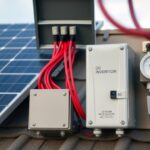
Your roof is basically sitting on free energy all day long, and the technology to capture it has gotten ridiculously good over the past decade. Solar panels convert sunlight directly into electricity through photovoltaic cells – no moving parts, no fuel, just pure physics doing its thing. The entire system works as a loop: panels generate DC power, an inverter converts it to AC power your home can use, and any excess gets sent back to the grid (which usually means credits on your bill). Most homeowners don’t realize how simple the setup actually is once you strip away the technical jargon.
Understanding Solar Panels and Their Magic
Those sleek panels on your neighbor’s roof contain dozens of photovoltaic cells made from silicon wafers, and when photons from sunlight hit them, they knock electrons loose to create an electrical current. It’s the same photoelectric effect Einstein won his Nobel Prize for, except now it’s mass-produced and affordable enough for residential use. Modern panels convert about 15-22% of sunlight into usable electricity, which sounds low but is actually incredibly efficient when you consider how much free sunlight hits your roof daily. The rest becomes heat, which is why proper ventilation matters for your installation.
What Happens to That Sunshine?
Once those electrons start flowing, you’ve got raw DC electricity that needs conversion before your home can use it. Your inverter transforms that DC power into the AC electricity that runs everything from your refrigerator to your phone charger. This happens in real-time throughout the day – when the sun’s blazing at noon, you’re generating peak power, and on cloudy mornings, production drops but doesn’t stop completely. The whole process is monitored through apps that show you exactly how much energy you’re producing minute by minute.
But here’s where it gets interesting for your wallet. During peak sunlight hours, your system often produces more electricity than you’re actually using, and that surplus doesn’t go to waste. Net metering programs let you send excess power back to the utility grid in exchange for credits that offset what you draw at night or on cloudy days. Think of the grid as a giant battery – you deposit energy when you have extra and withdraw it when you need it. Some utility companies offer better rates than others (California’s NEM 3.0 changed the game significantly in 2023), so your actual savings depend heavily on where you live and your local policies. And if you add a home battery system like a Tesla Powerwall or LG Chem, you can store that excess energy yourself instead of sending it back to the grid, giving you backup power during outages and even more control over your energy costs.
Is Solar Power Really Worth It for Your Home?
Most people think solar is either a magical money printer or a total scam, but the reality sits somewhere in between – and it’s actually pretty easy to figure out which side you’ll land on. Your specific situation matters way more than national averages, so blanket statements about solar being “worth it” are basically useless. The math depends on your electricity rates (which vary wildly by state), how much sun your roof actually gets, available incentives in your area, and whether you’re planning to stay put for a while. Someone in California paying $0.35 per kilowatt-hour will see completely different returns than someone in Louisiana paying $0.09.
Crunching the Numbers – Costs vs. Savings
A typical residential solar system runs between $15,000 and $25,000 before incentives, but the federal tax credit knocks off 30% right away. Your monthly electric bill becomes the key number here – if you’re paying $150+ monthly, you’re looking at potential savings of $1,800+ annually. State incentives, net metering policies, and your utility’s rate structure can swing the equation dramatically. Some homeowners break even in 6-7 years, while others might wait 12-15 years depending on these variables.
The Long-Term Payoff
Solar panels typically last 25-30 years with minimal maintenance, so you’re looking at 10-20 years of imperatively free electricity after payback. That’s where the real money gets made, and it’s something most people completely overlook when they’re stressing about upfront costs.
The financial picture gets even better when you factor in electricity rate increases – utilities raise rates by 2-3% annually on average, sometimes more. Your solar panels keep producing at the same cost (zero), while your neighbors watch their bills climb year after year. Plus, homes with solar sell for about 4% more on average, which on a $400,000 home means $16,000 added to your sale price. And here’s something that doesn’t show up in spreadsheets but matters to a lot of folks… you’re basically locking in your electricity costs for decades, which is pretty valuable peace of mind when everything else keeps getting more expensive.
What Types of Home Solar Systems Are Out There?
Most people think there’s just one kind of solar setup, but you’ve actually got several options depending on your needs and budget. The system you choose affects everything from your upfront costs to how much independence you’ll have from the utility company. Grid-tied systems keep you connected to your local power grid while generating your own electricity, while off-grid systems cut the cord completely. You can also go with a hybrid system that combines the best of both worlds with battery backup. Any of these configurations can work with either rooftop or ground-mounted panels.
| System Type | Key Features |
| Grid-Tied | Connected to utility grid, net metering available, no batteries needed, most affordable option |
| Off-Grid | Complete independence, requires battery storage, higher upfront cost, ideal for remote locations |
| Hybrid | Grid connection plus battery backup, power during outages, most expensive but most flexible |
| Rooftop | Uses existing roof space, less expensive installation, most common residential choice |
| Ground-Mounted | Installed on property, easier maintenance access, adjustable angles, requires available land |
Grid-Tied vs. Off-Grid – What’s the Difference?
The biggest distinction between these systems comes down to your relationship with the power company. Grid-tied systems let you sell excess electricity back to the utility through net metering, which can slash your bills to nearly zero. But here’s the catch – when the grid goes down, so does your power (even with panels on your roof). Off-grid systems give you complete energy independence with battery banks storing your power, but you’ll need to size everything perfectly since there’s no backup from the utility. Any homeowner considering off-grid should expect to spend 30-50% more upfront for batteries and larger panel arrays.
Rooftop vs. Ground-Mounted Panels – Which One’s Right for You?
Rooftop installations make sense for about 80% of homeowners because they use space you’re already not using. Your roof’s just sitting there anyway, so why not put it to work? Installation costs run lower since the mounting structure already exists, and you don’t sacrifice any yard space. Ground-mounted systems shine when your roof isn’t ideal – maybe it’s shaded, facing the wrong direction, or needs replacement soon. Any property with extra land can benefit from the flexibility ground mounts offer.
Ground-mounted panels give you some serious advantages that rooftop systems can’t match. You can adjust the tilt angle seasonally to maximize production, and maintenance becomes way easier when you’re not climbing on your roof. Snow removal takes minutes instead of being a safety hazard, and if a panel needs replacement, you’re dealing with a simple ground-level swap. The tradeoff? You’ll pay about $3,000-$10,000 more for the mounting hardware and installation labor, plus you’re giving up yard space that could be used for other things. Some HOAs also restrict ground-mounted systems, so check your neighborhood rules before getting too excited about this option.
Is Your Home Solar-Ready?
Not every home can handle solar panels the way you’d hope. Your property needs to meet certain physical and regulatory requirements before you can start generating your own electricity. Most homes are actually good candidates for solar, but there are some deal-breakers you need to know about upfront. The good news? Many obstacles that seem insurmountable at first glance often have workarounds. Your roof’s condition, angle, and sun exposure all play major roles in determining whether solar makes sense for your situation, and local building codes can either smooth the path forward or create unexpected hurdles.
Roof Suitability – Does Your Roof Make the Cut?
Your roof needs to be in solid shape before you bolt expensive solar panels onto it. If your roof is older than 10-15 years, you’ll want to replace it first – because removing and reinstalling panels later costs thousands of dollars you don’t want to spend. South-facing roofs with minimal shade work best, but east and west orientations can still deliver 75-90% of the energy production. Roof pitch matters too… anything between 15 and 40 degrees is ideal, though installers can work with steeper or flatter angles using specialized mounting hardware.
Local Regulations – What You Should Know
Every municipality has its own rules about solar installations, and some are way more restrictive than others. You’ll need building permits in almost every jurisdiction, and some homeowners associations can actually block your solar plans entirely despite state-level “right to solar” laws. Zoning regulations might limit panel placement or require specific setbacks from roof edges. So before you get too excited about going solar, check with your local building department and review your HOA covenants if applicable.
The permitting process typically takes 2-8 weeks depending on where you live, and your installer usually handles most of the paperwork for you. But here’s what catches people off guard – some areas require structural engineering reports to prove your roof can handle the additional weight (panels add about 3-4 pounds per square foot). Historic districts often have extra layers of approval, and coastal regions might mandate hurricane-rated mounting systems that increase costs. Your utility company also needs to approve the interconnection, which is a separate process from municipal permits. Some progressive cities have streamlined solar permitting to same-day approvals, while others still operate like it’s 1995 with paper forms and multiple office visits.
Getting Started with Solar – Where to Begin?
You’ve done the math, checked your roof, and decided solar makes sense for your home. Now comes the part where most people freeze up – actually pulling the trigger. The good news? Starting your solar journey isn’t nearly as complicated as the industry makes it seem. Your first move should be getting at least three quotes from different installers, because prices can vary by $5,000 to $15,000 for the same system size. Don’t just jump on the first company that knocks on your door or floods your Facebook feed with ads. Take your time comparing proposals, asking questions about equipment brands, warranties, and what happens if something goes wrong five years down the road.
Finding the Right Installer (Seriously, It Matters)
The installer you choose will make or break your entire solar experience, and I’m not being dramatic here. A bad installer can leave you with a leaky roof, underperforming panels, and years of headaches. Check their certifications – NABCEP certification is the gold standard in the industry. Read reviews on multiple platforms, not just their website testimonials. Ask for references from installations they completed 2-3 years ago, because that’s when problems usually surface. And here’s something most people miss: verify they’ll still be around to honor warranties. Solar companies go out of business all the time, leaving homeowners stuck with equipment issues and no one to call.
Financing Options You Need to Check Out
Cash isn’t the only way to go solar, and honestly, it’s not always the smartest move financially. Solar loans let you own the system while paying monthly, often less than your current electric bill. Leases and power purchase agreements (PPAs) require zero money down, though you won’t own the equipment or qualify for tax credits. Home equity loans or lines of credit typically offer the lowest interest rates if you’ve got equity built up.
The federal solar tax credit gives you back 30% of your total system cost, which is huge… but only if you owe enough in taxes to claim it. Some states and utilities stack additional rebates on top of that. Solar loans specifically designed for these systems usually factor in the tax credit, giving you a lower payment for the first 18 months while you wait to file your taxes. Just watch out for dealer fees hidden in loan terms – some loans look great at 0.99% interest until you realize there’s a 20% dealer fee baked into your system price. Property Assessed Clean Energy (PACE) financing ties the loan to your property taxes, which sounds convenient but can complicate things if you sell your house.
Final Words
Hence, your journey into solar power doesn’t have to be overwhelming if you break it down into manageable steps. You’ve got the knowledge now about how systems work, what benefits you can expect, and whether your home’s a good candidate for panels. And honestly? The technology’s only getting better and more affordable each year. So if you’re still on the fence, check out the official Homeowner’s Guide to Solar for additional resources. Your investment in solar isn’t just about cutting your electric bill – it’s about taking control of your energy future and doing something meaningful for the planet while you’re at it.
FAQ
Q: Will solar panels actually work during a power outage if I have them installed on my roof?
A: Most people assume yes, but here’s the shocker – standard grid-tied solar systems automatically shut off during outages. It’s a safety feature that protects utility workers from unexpected electricity flowing back into the grid while they’re fixing lines. So if you want backup power during blackouts, you’ll need to add a battery storage system to your setup. The batteries store excess solar energy and kick in when the grid goes down, keeping your lights on and fridge running. Without batteries though? Your panels just sit there doing nothing, even on the sunniest day. Kind of ironic, right?
Q: How long does it actually take to break even on a home solar installation?
A: The payback period varies wildly depending on where you live, but most homeowners hit their break-even point between 6-12 years. States with high electricity rates and generous incentives (like California, New York, or Massachusetts) tend to see faster returns – sometimes as quick as 5 years. Meanwhile, folks in areas with cheaper electricity might wait 15 years or more. Your specific timeline depends on your system cost, available tax credits and rebates, how much electricity you use, and your utility rates. And here’s something to consider… electricity prices typically rise 2-3% annually, which means your savings accelerate over time. So while that initial investment feels hefty, you’re imperatively locking in lower energy costs for the next 25-30 years.
Q: Can I really install solar panels myself to save money, or do I need professionals?
A: DIY solar kits exist and yes, you can technically install them yourself if you’re seriously handy and comfortable working on your roof with electrical systems. But – and this is a big but – most utility companies won’t connect your system to the grid without proper permits and inspections, which usually require a licensed electrician’s stamp of approval. Plus, you’ll likely void equipment warranties and miss out on installer workmanship guarantees if something goes wrong. The bigger issue? One mistake with electrical connections or roof penetrations can create fire hazards or leaks that cost way more to fix than you saved on installation. Professional installers also handle all the permitting headaches, interconnection paperwork, and they know local building codes inside out. Unless you’ve got serious electrical experience and plenty of time, the few thousand dollars you might save aren’t worth the risks and hassles.