
Battery choices for installing energy storage pit DIY cost savings and hands-on control against professional safety and compliance; you may achieve significant savings with DIY but face electrical shock and fire risks, voided warranties, and permit issues, while hiring a certified installer ensures code compliance, proper grounding, inspected connections, and backed warranties-evaluate your skills, equipment, and local rules to decide what protects your home and investment.
Key Takeaways:
- High-voltage battery work demands electrical expertise, permits, and code compliance; hiring a pro lowers fire/electrocution risk and helps preserve insurance and warranty coverage.
- DIY can cut upfront labor costs for simple bolt-on systems if you have the skills and inspections, but mistakes often lead to poor performance, extra expenses, or voided warranties.
- Hire a professional for system sizing, inverter and solar integration, and backup/islanding setup; DIY is only advisable for small, manufacturer-supported modular units with clear instructions and local permit oversight.
Understanding Solar Batteries
You should evaluate batteries by capacity, power rating and lifecycle: typical home systems range from about 5-20 kWh, with Li‑ion offering ~90-95% round‑trip efficiency and LFP cells often rated 3,000-10,000 cycles; lead‑acid lasts far fewer cycles and tolerates lower cost. You must factor inverter compatibility, temperature limits and local permitting when sizing your system to meet backup or time‑shift goals.
Types of Solar Batteries
You’ll commonly see five families: lithium‑ion (NMC/LFP) for high energy density and long life, lead‑acid for low upfront cost, redox flow for long duration, sodium‑ion emerging for cost advantage, and saltwater as a niche non‑flammable option. Any selection should match your load profile, inverter type and budget constraints.
- Lithium‑ion (LFP/NMC)
- Lead‑acid (AGM/Flooded)
- Flow (Vanadium)
- Saltwater / Sodium‑ion
| Lithium‑Iron Phosphate (LFP) | 8,000-10,000 cycles; 80-90% DoD; 90-95% efficiency; ~$400-600/kWh |
| NMC (Lithium) | 2,000-5,000 cycles; higher energy density; 90-95% efficiency; ~$300-700/kWh |
| Lead‑acid (AGM/Flooded) | 300-1,200 cycles; 50% DoD typical; 70-85% efficiency; low capital cost |
| Redox Flow (Vanadium) | 10,000+ cycles; easily scalable hours of storage; 65-80% efficiency; higher footprint |
| Saltwater / Sodium‑ion | Emerging tech; non‑flammable; moderate cycles (est. 2,000-5,000); cost and availability improving |
Benefits of Using Solar Batteries
You gain backup power for outages, the ability to shift solar generation to evening peaks, and reduced grid demand charges; a 10 kWh battery commonly covers an average evening load of 8-12 kWh, and pairing with time‑of‑use rates can cut bills by hundreds to thousands annually depending on your tariff.
For example, homeowners in high peak‑pricing regions often see payback in roughly 5-12 years when batteries are used for peak shaving and arbitrage; commercial sites reduce demand charges more dramatically, sometimes yielding ROI under 5 years. You should also weigh warranty length (typically 5-15 years), degradation rates (LFP holds >80% capacity after thousands of cycles) and local incentives that can materially shorten payback.
DIY Solar Battery Installation
If you want to cut costs, handling the install yourself can save 30-50% compared with pro labor, but you must manage high-voltage DC, heavy modules (many batteries weigh 40-200 lb), and code obligations. Plan for typical residential systems of 5-20 kWh at 48 V, obtain permits, and accept that any mistake can cause fire or electric shock, so limit DIY to what matches your skills and tools.
Tools and Materials Required
You’ll need a digital multimeter, insulated screwdrivers, wire strippers/crimpers, a torque wrench, insulated gloves and eye protection, battery cables (gauge depends on current), MC4/appropriate PV connectors, DC fuse/breaker, a compatible inverter/charger, mounting hardware, and conduit; also budget for permits and a professional inspection to finalize interconnection.
Step-by-Step Installation Guide
Start by choosing a ventilated, level location and verify weight capacity, then de-energize PV and utility connections before mounting the battery; next install DC disconnects and fusing, connect battery bank to the inverter following polarity and torque specs on the battery sheet, program the inverter/charger for your battery chemistry, perform insulation and voltage tests, and schedule the required electrical inspection and utility interconnection.
During wiring, follow manufacturer torque ranges (often listed as a specific in‑lb value), size conductors to limit voltage drop (for example, a 48 V system delivering ~100 A often requires AWG 2-4 depending on run length), and provision overcurrent protection sized per NEC guidance (commonly ~125% of continuous inverter current). Use lockout/tagout and verify isolation with a meter before touching terminals; if any step exceeds your comfort, get a licensed electrician.
Installation Steps & Notes
| Step | Notes & Examples |
|---|---|
| Site Prep | Choose 5-20 kWh system location, 18-36 in clearance, rated shelf for 50-200 lb; ensure ventilation for lead-acid. |
| Shutdown | Open PV combiner, inverter AC breaker, and battery isolator; verify 0 V with multimeter before work. |
| Mounting | Anchor per manufacturer; bolt torque per datasheet (follow stated in‑lb); avoid direct sun and water ingress. |
| Wiring & Protection | Use correct AWG for DC current, install DC fuses/breakers, and a DC disconnect; size OCPD ~125% of continuous inverter current. |
| Commissioning | Program inverter battery profile (LiFePO4 vs lead-acid), run no-load voltage and insulation tests, confirm charge/discharge setpoints. |
| Inspection | Submit permit, pass electrical inspection, and complete utility interconnection paperwork before restoring to service. |
Professional Solar Battery Installation
When you choose professional installation you get code compliance, permit handling, and grid interconnection managed for you; installers also provide commissioning and post-install testing so your system meets performance specs. Professional work reduces the risk of improper wiring and electrical fires, and typically preserves the battery manufacturer’s warranty. For a deeper comparison see DIY vs. Professional Installation: What’s Best for You?
Advantages of Hiring Professionals
Certified installers bring experience with mounting, ventilation, and battery placement to maximize lifespan; they often finish installs in 4-12 hours and provide system integration with inverters and monitoring. You benefit from permits pulled, utility interconnection handled, and usually a 10-year or longer workmanship warranty, which can protect your investment more than DIY attempts.
Cost Considerations for Professional Installation
Expect total installed costs to vary widely: battery packs commonly range from $5,000-$15,000, while professional installation, permits, and balance-of-system can add $1,000-$5,000, bringing many projects to roughly $6,000-$20,000. Federal incentives often reduce net cost – for example, the investment tax credit can cover about 30% when storage is paired with new solar.
Breaking it down, labor typically runs at local rates of $75-$150/hour for 4-12 hours depending on complexity; permit and inspection fees commonly add $200-$1,000. For example, a 13.5 kWh home battery might cost ~$8,000-$12,000 for the unit plus $1,000-$3,000 to install; over time you can recoup costs through backup capability, demand charge reduction, and avoided grid outages.
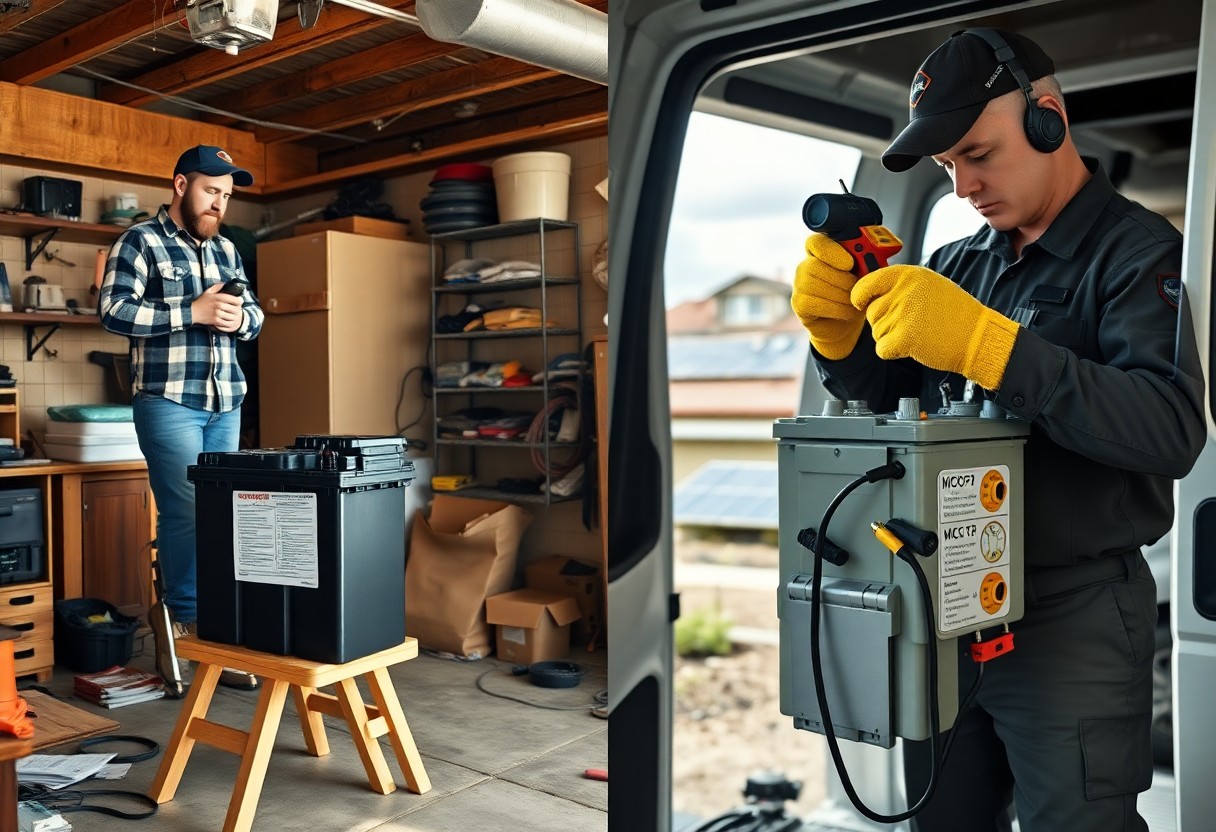
Comparing DIY and Professional Installation
| DIY | Professional |
| Save 30-50% on labor, handle mounting, wiring and commissioning yourself, higher risk of voiding warranty. | Includes permits, code compliance, faster turnaround (4-8 hours on-site), and preserved manufacturer warranty. |
Time and Effort Involved
Expect a wide range: if you tackle a 10-15 kWh system yourself it can take roughly 10-40 hours over several weekends, depending on experience and tools; professionals typically finish the on-site work in 4-8 hours with a crew. Permits and inspections often add 1-3 weeks regardless of who installs, and complex grid-tied setups require extra commissioning steps and coordination with your utility.
- DIY: 10-40 hours plus time researching electrical codes and mounting options.
- Professional: 4-8 hours on-site, with permit handling and electrician time included.
- After installation, plan 1-3 weeks for permit approval and utility interconnection.
Safety and Reliability Factors
You must handle high voltage (commonly 48-400V) and potential thermal runaway risks; certified installers follow UL 9540, NFPA 70 guidelines and use fire-rated enclosures and monitoring. If you install yourself you risk improper grounding, reversed polarity, or voiding a 5-10 year warranty, while professionals provide installation records and testing results that improve insurance and grid approval odds.
- Voltage: Home systems often run 48-400V; PPE and isolation are mandatory for safe work.
- Certification: UL 9540, listed in manuals and installers’ paperwork reduce insurance friction.
- After commissioning, maintain monitoring logs and schedule annual inspections to reduce failure risk.
Digging deeper, professional crews install thermal management, ventilation clearances, and arc-fault/short‑circuit protection per local code; they document commissioning with voltage, current and SOC readings. You should verify inverter/battery compatibility (e.g., single vs three‑phase), check that the install preserves the manufacturer’s warranty, and require a written safety plan-these steps reduce incidents and speed up utility interconnection.
- Documentation: As‑built diagrams and commissioning reports matter for long-term service.
- Maintenance: Annual checks of connections, firmware and enclosure integrity prevent faults.
- After any system change, update documentation and notify your insurer and utility immediately.
Regulatory and Warranty Considerations
Local Regulations and Permits
Permits and code compliance vary widely by jurisdiction: you’ll often need an electrical permit, inspection, and utility interconnection approval, and local authorities typically inspect under NEC Article 706 or local equivalents. Permit fees commonly run from $100-$500, and incentive programs (for example, some state rebates and California’s SGIP) require documented permits and inspections. Failing to get proper permits can lead to fines, forced removal, or denied incentives, and it increases safety risk if vents, clearances, or fire suppression requirements aren’t met.
Warranty Implications for DIY vs. Professional
Manufacturer warranties typically span 5-15 years or are cycle-based, and many require correct commissioning and certified installation to remain valid; some well-known batteries, for example, offer a 10‑year limited warranty. If you install yourself, check for clauses that void coverage for non-certified installers or improper commissioning-while professional installers often provide an additional 1-5 year workmanship warranty that covers installation faults.
Dig into warranty fine print: look for exclusions around unauthorized modifications, improper ventilation, or failure to register/commission the system within specified timeframes. You should keep permits, photos, commissioning reports, and serial numbers to support any claim, since insurers and manufacturers may request proof; otherwise you risk a denied claim or voided warranty, and your homeowner policy may not cover a DIY-related battery fire or damage.
Making the Right Choice for Your Needs
Weigh system size, installation complexity, and long-term costs against what you want: a small 5-10 kWh unit for vital loads, or a 13.5 kWh+ system (like a Powerwall) for extended backup and time-shifted savings. If you aim for partial grid independence, expect higher upfront cost but greater resilience; if you only need outage protection, a smaller battery and transfer switch may suffice. Also factor in permits, interconnection and whether DIY will void warranties.
Assessing Your Skills and Knowledge
If you have formal electrical training or are a licensed electrician, you can handle PV-battery integration, inverter configuration, and code-compliant AC/DC wiring; otherwise hire a pro. Working on high-voltage DC battery terminals, configuring BMS communications, and meeting NEC/local code carries serious electrocution and fire risk. Inspect wiring diagrams, torque specs, and isolation procedures before you start, and verify you can pull permits and pass inspections where required.
Budget and Long-Term Goals
Decide between lower upfront DIY costs and higher professional fees that typically run a complete battery system to about $7,000-$20,000 installed. Compare lifecycle metrics: typical home batteries are 5-20 kWh, with warranties commonly at 10 years; a 13.5 kWh unit covers roughly 40% of an average U.S. home’s ~30 kWh/day usage. Factor in incentives, expected payback (often 5-12 years), and whether you want backup only or daily energy shifting.
Dig deeper into lifecycle costs: check manufacturer warranties (often time-based or cycle-based), BMS degradation rates, and inverter replacement timelines. Many systems list warranties of about 10 years or a set number of cycles (ranges vary), and realistic usable life is typically 10-15 years. Calculate total cost per kWh cycled, include maintenance and potential replacement costs, and run scenarios with your utility’s time-of-use rates to estimate payback and ROI.
To wrap up
Hence you should weigh cost savings of a DIY solar battery against safety, warranty, permitting and long-term performance; professionals provide code knowledge, proper sizing, commissioning and liability coverage, while DIY can be acceptable if you have electrical expertise and local approval. Prioritize quality equipment, accurate installation and realistic maintenance expectations to ensure your system delivers the backup and savings you expect.
FAQ
Q: Should I install a solar battery myself or hire a professional?
A: Assessing your skills, the battery type, local electrical code and insurance rules will guide the decision. DIY can work for small, plug-and-play AC-coupled batteries or simple retrofit systems if you have solid experience with home electrical work, proper tools, and access to manufacturer documentation. Benefits of DIY: lower labor cost and faster scheduling. Downsides: high-voltage DC/AC hazards, potential code violations, voided warranties, denied insurance claims, incorrect grounding or isolation, and poor integration that reduces lifespan or performance. Hire a licensed installer for grid-tied systems with integrated backup, large-capacity lithium systems, multi-panel inverter setups, or when permits and utility interconnection are required. Professionals handle permit submission, NEC-compliant wiring, equipment placement, fire-safety clearances, signage, and post-install testing that most inspectors expect.
Q: What permits, inspections, warranties and utility steps should I expect?
A: Most jurisdictions require a building or electrical permit and a final inspection for energy storage installations; utilities commonly require interconnection approval or a change to your net-metering agreement. Installations must meet the National Electrical Code (NEC) sections relevant to energy storage and local amendments, and batteries should be UL/IEC listed for safety. Manufacturer warranties typically cover defects and capacity loss but often have clauses voiding coverage if unauthorized or non-professional installation occurs. Installer warranties (labor, workmanship) are separate and valuable if problems arise. Expect requirements for disconnect switches, labeling, clearance zones, ventilation or fire suppression depending on chemistry, and documentation submission to receive incentives or rebates. Keep permit records, product datasheets, and installation photos for compliance and to support warranty or incentive claims.
Q: How do I size, integrate and maintain a battery system for reliable performance?
A: Start by calculating your energy needs: average daily consumption (kWh) and the amount of backup time you want. Use usable battery capacity = rated capacity × usable depth of discharge (DoD) × round-trip efficiency. Example: for 10 kWh daily use and one-day backup with 80% DoD and 90% efficiency, required rated capacity ≈ 10 / (0.8×0.9) ≈ 13.9 kWh. Also size the inverter for continuous and surge power of critical circuits and verify compatibility (AC coupling vs DC coupling, hybrid inverters, battery communication protocols). Place batteries in a cool, dry, ventilated area, off combustible materials, observing manufacturer clearance and thermal limits. Maintenance includes firmware updates, periodic state-of-health checks via the monitoring portal, visual inspections for corrosion or leaks, cleaning vents/filters, and verifying connections and breaker operations annually. Plan for end-of-life recycling or return-to-manufacturer programs and consider future capacity expansion by selecting compatible modular systems or inverter architectures that support scaling.