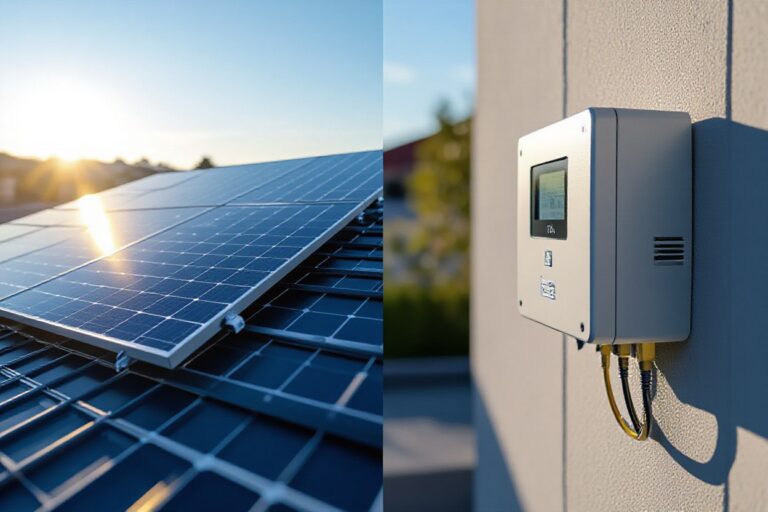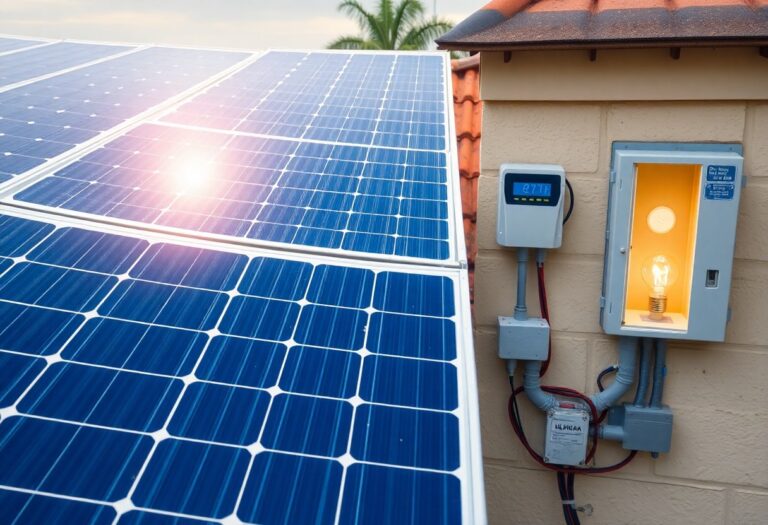
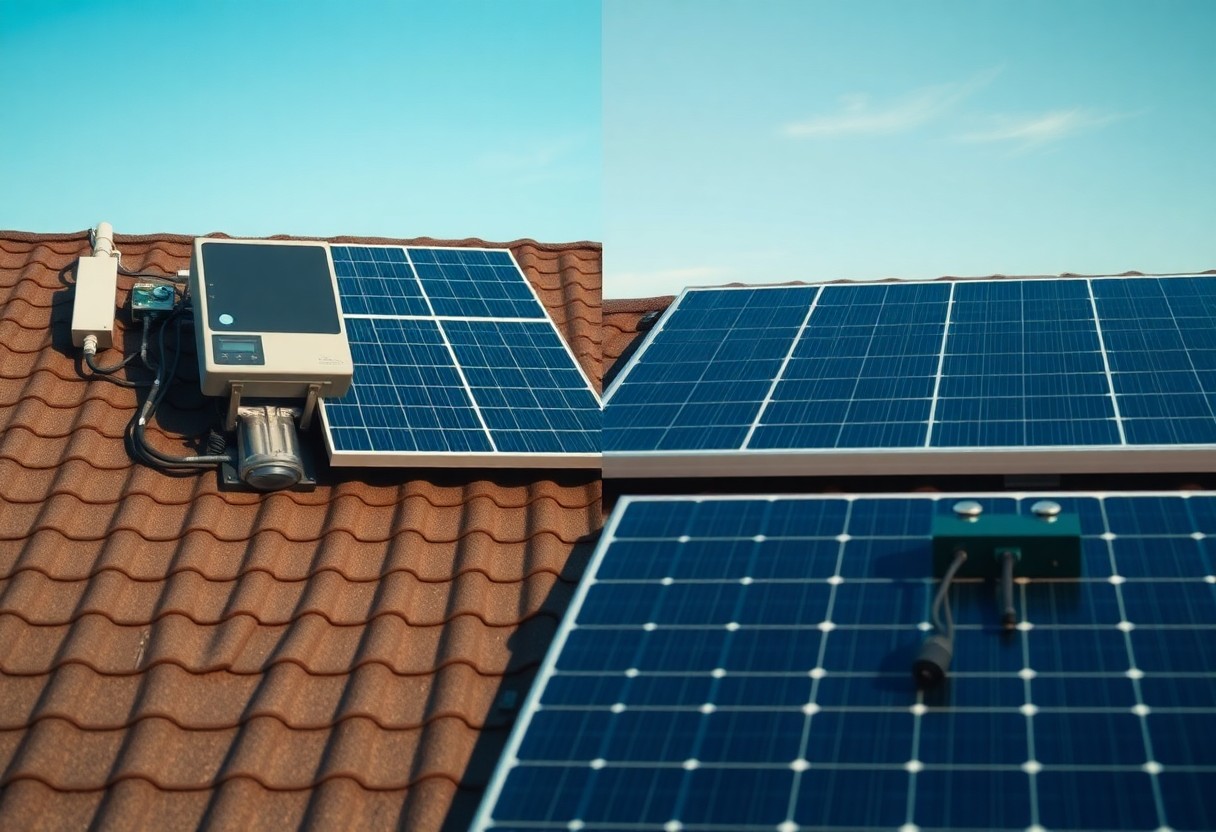
Explained are the practical differences so you can decide what fits your roof and budget: string inverters offer lower upfront cost and simpler maintenance, but are vulnerable to shading and single-point failure; microinverters provide higher energy yield, panel-level monitoring and safer low-voltage operation, though they increase component count and cost. You should weigh system performance, shading, installer expertise and the risk of high-voltage DC during maintenance when selecting the right inverter architecture for your home.
Key Takeaways:
- String inverters use a single central inverter for many panels – lower upfront cost and simpler maintenance, but system output is constrained by the weakest panel and requires high-voltage DC wiring.
- Microinverters are installed at each panel – higher initial cost but maximize energy harvest with shading/soiling or mixed orientations, offer per-panel monitoring, and reduce high-voltage DC runs.
- Choose string inverters for uniform, unshaded, budget-sensitive systems; choose microinverters for complex or shaded roofs, per-panel control, easier expansion, and improved on-site safety-weighing cost vs on-roof electronics and maintenance.
Overview of Inverter Technologies
Inverter options fall into two dominant categories – string inverters and microinverters – each with trade-offs in cost, reliability, and performance. String inverters manage strings of panels and are typical for 3-10 kW residential systems, while microinverters attach at each module for module‑level MPPT and shade resilience. You should weigh upfront cost, maintenance, and warranty (string ~10-12 years; micro ~20-25 years). For example, a shaded south/west roof often recoups higher microinverter cost through a 5-15% energy gain.
What are String Inverters?
String inverters connect a series of panels to a single inverter, providing one or a few MPPT channels; typical efficiency runs about 96-98%. They cost less per watt and are simpler to install, commonly used in 3-20 kW arrays. However, a shaded or underperforming module drags down the whole string and the inverter is a single point of failure, so you may face full-system downtime if the inverter fails. Warranties usually sit around 10-12 years.
What are Microinverters?
Microinverters mount at each panel and convert DC to AC at the module, enabling per-panel MPPT, fine-grained monitoring, and improved shade tolerance. You’ll pay a higher upfront cost – often 20-50% more than a string system or roughly $60-$150 per panel – but gain long warranties (commonly 20-25 years) and reduced high-voltage DC on your roof, which improves safety and can simplify code compliance.
Because microinverters operate independently, a single unit failing rarely cripples production; panels continue producing while you replace one unit. Field studies and vendor data show module-level systems can boost yield 5-15% on shaded or complex roofs, and companies like Enphase back this with 25‑year warranties and integrated monitoring so you can spot underperformance by panel. You should factor lifecycle cost, access for replacement, and monitoring benefits when comparing to string systems.
Key Differences Between String Inverters and Microinverters
You’ll notice string inverters centralize DC-to-AC conversion off the roof while microinverters convert at each panel, which changes performance, safety, and maintenance trade-offs; for example, a single-string inverter is a single point of failure for the whole array, whereas microinverters offer modular redundancy and often come with 25-year warranties versus typical string inverter warranties of 5-12 years.
Efficiency and Performance
When panels face partial shading or mismatched orientations, microinverters with panel-level MPPT can boost harvest by roughly 5-15% in field studies compared with a string inverter; conversely, a well-sized, unshaded string inverter reaches conversion efficiencies around 96-98%, while modern microinverters convert near 95-99% per panel, so your site layout and shading pattern determine which yields more energy.
Cost and Installation
Upfront, microinverters typically add about 10-30% to system cost (roughly $80-$200 per panel) while string inverter systems keep inverter cost concentrated (a residential string unit often $800-$2,000); installation time for string systems is usually shorter, but microinverters simplify wiring and can eliminate separate DC combiners and some rapid-shutdown equipment, affecting labor and permitting.
For concrete comparison, a 6 kW system with 20 panels might use a $1,200 string inverter versus ~$120 per-panel microinverter (~$2,400 total), so you’d pay roughly $1,200 more up front but potentially avoid a mid-life string inverter replacement (10-12 years) because microinverters commonly include 20-25 year warranties; additionally, string setups keep high-voltage DC on the roof, which affects your safety protocols and may require extra shutdown hardware, while microinverters move AC to the roof edge, easing rapid-shutdown compliance.
Advantages of String Inverters
String inverters give you a compact, cost-effective solution for many installations: they typically deliver 97-99% inverter efficiency and cost about 20-40% less than microinverter systems for comparable capacity. Centralized units simplify wiring and monitoring, and commercial models scale to 50-100+ kW. Be aware that centralization also creates a single point of failure and concentrates DC wiring, which requires proper installation to mitigate arc and shock risks.
Simplicity and Reliability
Fewer components mean you maintain fewer devices: a single string inverter is easier to service than dozens of microinverters, and typical lifespans run ~10-15 years with warranties often extendable from 10 to 20 years. You benefit from mature, standardized designs and widely available replacement parts, but your system depends on that one unit, so you should plan for redundancy or rapid swap-out strategies to minimize downtime.
Suitable Applications
String inverters suit you when panels share orientation and shading is minimal-residential roofs with uniform south-facing arrays and commercial rooftop or ground-mount farms are ideal. For typical home systems of 3-10 kW or utility/commercial projects above 50 kW, string inverters deliver the best $/W. Avoid them when multiple orientations or heavy shading cause string-level mismatch.
For example, a 9 kW home array of 30 panels (300 W each) on a single south-facing roof pairs well with an 8-10 kW string inverter, keeping costs down and maintenance simple. Conversely, a commercial 100 kW ground array often uses several 50 kW string inverters for modularity. If NEC rapid-shutdown compliance or shading is present, you can add module-level optimizers to mitigate mismatch-trading some cost for performance and safety.
Advantages of Microinverters
When you choose microinverters, each panel runs its own MPPT so shading, mismatch, or a dirty module doesn’t throttle the whole array. Field data and installer reports commonly show 5-15% higher annual energy on complex roofs, with extreme cases exceeding 20%. They usually ship with 20-25 year warranties, and by converting DC to AC at the module they reduce high-voltage DC on your roof, lowering fire risk, which matters for rooftop safety and code compliance.
Increased Energy Yield
Because panels operate independently, you avoid series-limited current that drags down string systems; in mixed-orientation or partly shaded installs this often translates to 5-15% more energy annually. For example, a 10-panel array with one shaded module can lose ~10% of total yield with a string inverter but only that single panel’s output with microinverters, preserving the rest of your array’s production.
Individual Panel Monitoring
Microinverters provide per-module telemetry so you can see voltage, current and power at the panel level and get alerts when output deviates. That live visibility makes it straightforward for you or your installer to spot a degrading cell, loose connector, or soiling issue early, turning weeks of blind loss into a targeted fix and lower maintenance costs.
Panel-level dashboards typically refresh at vendor-dependent intervals-commonly 1-15 minute granularity-and let you filter by date, roof section or module. Installers use these logs to pinpoint hot spots, inverter failures or gradual degradation; for instance, an installer can identify and replace a failed microinverter in days rather than troubleshooting an entire string, immediately restoring that panel’s share and avoiding prolonged system-wide losses.
Maintenance and Longevity
String Inverter Maintenance
With string inverters, expect 10-15 years of life and typical manufacturer warranties of 5-12 years. You should schedule annual inspections for ventilation, torque checks, and firmware updates; failing fans or overheating can reduce lifespan. Because the inverter is centrally located, a single point of failure can drop your whole array until replacement, which often costs $1,000-$3,000 including labor. Many owners plan for replacement once output falls below expected by 10-15%.
Microinverter Maintenance
Microinverters often come with 20-25 year warranties and provide panel-level monitoring, so you can spot underperformance quickly. You’ll rarely need system-wide service; instead you replace individual units when they fail, limiting downtime. Units typically cost $50-$200 each, with installers arguing higher energy yield offsets cost in shaded or mismatched arrays. Pay attention to connector seals and flashing to prevent moisture ingress and corrosion.
If a microinverter fails, the monitoring portal usually pinpoints the unit, and a swap takes roughly 15-60 minutes once you access the roof, though safety gear and weather can add time. Out-of-warranty replacement installed runs about $150-$300 per unit. You can proactively reduce issues by checking for loose MC4/DC connectors, inspecting for corrosion at junctions, and logging peak IV readings in summer to catch thermal degradation early.
Choosing the Right Inverter for Your Needs
You should weigh installation complexity, roof geometry, and long‑term returns: a 5 kW suburban system often sees a 20-30% lower upfront cost with a string inverter, while microinverters can boost harvest by up to 10% on shaded or multi‑orientation roofs and frequently come with 20+ year warranties.
Factors to Consider
Assess shading patterns, array size, budget, and serviceability: irregular roofs and module‑level monitoring favor microinverters, uniform large arrays favor a string inverter, and if you plan long DC runs factor in roof access for maintenance; higher DC voltage on long roof runs raises electrical risk. After comparing cost, efficiency, and warranty, choose the option that matches your priorities.
- System size – small (<5 kW) vs large (>10 kW) affects per‑watt cost.
- Shade – panel‑level solutions outperform when shading >10%.
- Budget – microinverters cost more per watt up front.
- Warranty – microinverters often 20+ years; strings typically 10-15 years.
- Safety – string systems can carry high DC voltage across the roof.
Common Use Cases
For small residential roofs with mixed orientations you’ll usually pick microinverters to maximize output; for large ground‑mounted or commercial arrays a string inverter gives lower cost per watt and simpler centralized maintenance, while hybrid inverters are common when you want integrated battery storage and off‑grid capability.
If you install a 6 kW home system with ~15% shading you might gain about 9% annual energy using microinverters; by contrast, when you manage a 50 kW commercial roof, selecting centralized string inverters can lower LCOE by roughly 8-12% and reduce onsite service complexity.
Conclusion
With these considerations you can evaluate efficiency, shade tolerance, installation complexity, and long-term costs to decide which inverter best fits your system; consult Microinverters vs String Inverters (A data-driven approach) for comparative metrics and case studies that help you maximize performance and ROI.
FAQ
Q: What are the main functional differences between string inverters and microinverters, and how do those differences affect system performance?
A: String inverters convert DC to AC for a series string of panels using a single central unit, so the whole string operates at the performance level of the lowest-producing panel. Microinverters convert DC to AC at each panel individually, allowing each panel to operate and be optimized independently. As a result, microinverters generally yield higher energy harvest in conditions with panel-to-panel variation (different orientations, tilt, or partial shading), while string inverters can be more efficient in uniform, unshaded arrays and often have lower per-watt equipment costs.
Q: How do shading, panel mismatch, and monitoring differ between the two technologies?
A: With a string inverter, shading or mismatch on one panel reduces output for the entire string unless module-level power electronics (MLPE) such as power optimizers are added. Microinverters eliminate string-level effects because each panel operates independently, so shading on one panel only affects that panel’s output. For monitoring, microinverter systems commonly provide panel-level performance data out of the box, making fault detection and performance analysis easier. String inverter systems typically offer array-level or string-level monitoring unless paired with MLPE; diagnosing issues at the individual module level can be harder without additional equipment.
Q: What should I consider about cost, installation, maintenance, and reliability when choosing between string inverters and microinverters?
A: Upfront, string inverters are usually less expensive per watt and simpler to install for large, uniform arrays. Microinverters carry higher hardware and installation costs but can increase lifetime energy yield in complex roofs, which may offset the premium over time. Maintenance differs: string inverters concentrate electronics in one unit, which is easier and less costly to replace but becomes a single point of failure; microinverters distribute electronics across panels, reducing single-point risk but potentially increasing the number of units that could require service. Reliability varies by brand and model; many microinverters come with longer warranties (10-25 years) while string inverter warranties are often shorter, though external environmental stress, cooling, and accessibility also influence lifespan. Consider array layout, shading, budget, desired monitoring granularity, and warranty terms when choosing.